
The Shoebill (Balaeniceps rex), also known as whale-headed stork, is a species of bird that has a stork-like form.
This bird has been previously classified with the storks in the order Ciconiiformes. However, evidence suggested that the shoebill belongs in the Pelecaniformes order with other birds such as herons and pelicans.
The shoebill is a tall bird, with a height range of 1,1 up to 1,4 meters. They have a wingspan of around 2,3 up to 2,6 meter and weighing around 4 to 7 kilograms. The adult shoebills have blue-grey feathers with darker grey flight feathers. But the chicks have a darker grey feathers with a brown tinge.
Their iconic bill is the thickest bill in the world, and is able to decapitate a fish’s head. The thickness of their bill allows them to communicate.
Behaviour
Shoebills are mostly solitary animals, they come together only to mate. They are also known for their slow movements and standing still for a long period of time.
While hunting, shoebills stalks their prey patiently, moving very slowly and sometimes even motionless. Once they spotted a prey, they would launch a quick and violent strike.
Habitat
The shoebills can be found in countries like, South Sudan, DRC, Uganda, Rwanda, Zambia, and Tanzania. Shoebills inhabit wetlands and riverbanks, they prefer poorly oxygenated waters like swamps where fishes often come up to surface to breathe.
Breeding
Unlike pelicans, herons, and storks, shoebills are solitary animals, even in their breeding habits. They don’t nest in breeding colonies. Shoebills protect their nesting area by their bill snaps, they cover a 3 kilometer area.
Their nest are about 1 to 1,7 meters wide, and are made of aquatic vegetation. A female shoebill can lay up to 3 eggs. The parents take turns caring for the nestling.
The chick that hatches first gets all the care and attention, the eldest chick becomes stronger while the younger chicks get weaker. The younger chicks are considered “back-ups” if the eldest chick is weak or dies. While it’s uncommon, shoebills can raise more than one chick.
Diets and Threats
Shoebills are carnivores, they can eat fish, snakes, frogs, and even baby crocodiles. Although adult shoebills don’t really have threats other than humans, chicks and eggs are at risk of monitor lizards, monkeys, and storks. But the main threat to shoebills is habitat destruction.
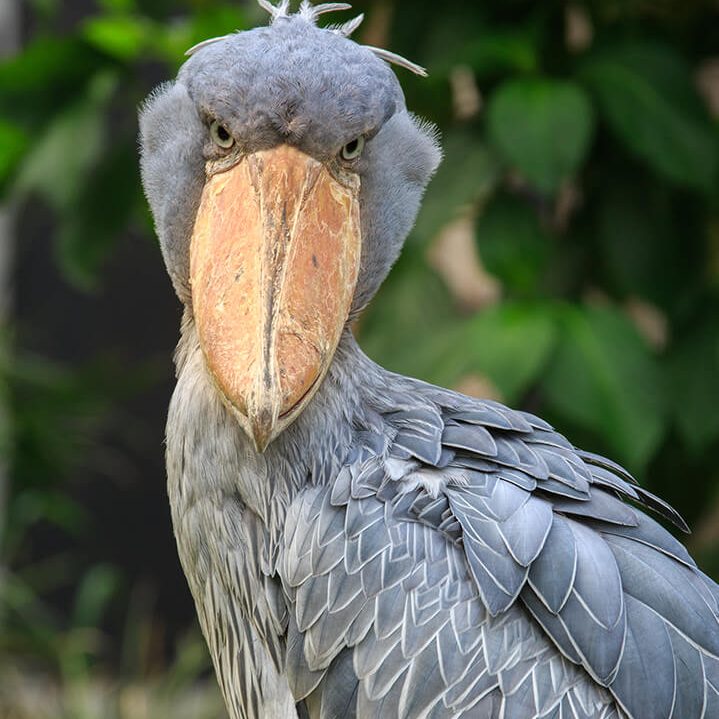
Photo Credit: https://animals.sandiegozoo.org/animals/shoebill
Conservation
Sadly, shoebills are also endangered animals, being rated as “Vulnerable” by the IUCN. Shoebills are also known to abandon their nest, leaving their chicks to die. Luckily locals have been raising awareness to reduce prevent poaching.
Conservation Efforts
1. International Crane Foundation
The International Crane Foundation contributes to wetland conservation in Africa, benefiting shoebills indirectly.
2. Wildlife Conservation Society
Wildlife Conservation Society engages in habitat conservation and anti-poaching efforts in regions like South Sudan and Uganda, that are home to shoebills. They also provide resources to park rangers and community members to support shoebill conservation.
3. Save the Shoebill Conservation Project (SSCP)
The SSCP is raising awareness of the importance and value of the local Shoebill population and to conserve its habitat.
Conclusion
The shoebill is a symbol of the biodiversity found in Africa’s wetlands. Despite facing challenges such as poaching and habitat loss. Communities have made efforts to help protect wetlands and anti-poaching measures.
By protecting wetlands, and raising awareness about the shoebill, we can ensure a brighter future for them. Together, with our collective efforts, we can protect this species and it’s home.