
The kākāpō (Strigops habroptilus), also known as the owl parrot, is the largest flightless parrot.
Kākāpō is considered a medium-sized bird. they can be up to 64 cm long with a wingspan of around 82 cm and can weigh up to 3 kg. They are recognizable by their yellow-green feathers, large grey beak, short legs, short wings, forward-facing eyes, and their facial disc.
The kākāpō can’t fly since their wings are too small. So they rely on their claws to climb trees, they also use their beak as an extra claw, and their wings to balance themselves.
Behaviour
The kākāpō is a nocturnal bird, meaning they are most active at night. They stay undercover in trees or on the ground during the day and move around at night. To avoid predators in the day, the kākāpō has evolved to become nocturnal. When kākāpō feel threatened, they freeze so that it is more camouflaged in the vegetation surrounding them.
Kākāpō also has a strong sense of smell, which is rare among birds, and can recognize specific scents.
Despite being solitary birds, kākāpō are curious by nature and have been reported to interact with humans. They are also known to have different personalities.
Habitat
The kākāpō can be found in New Zealand. They used to be found in New Zealand’s forests, scrublands, and coastal regions throughout both main islands. Now, they can only be found in predator-free islands.
They were once able to live in almost every climate found across the islands of New Zealand.
Breeding
Kākāpō has a unique breeding system called the lek, where male kākāpō gather in specific areas to compete with one another to attract females.
These leks can be located up to 5 km from a kākāpō’s usual territory, with an average distance of 50 m apart inside the lek arena. The kākāpō is one of the only birds in this world that makes it’s own leks. Each court consists of one or more “bowls” which are used to enhance the booming calls.
Male kākāpō would perform booming mating calls, and these calls can last up to 8 hours every night for more than four months. Females that are attracted to the males calls also may need to walk a few kilometers to enter the males court, the male would then perform a display. Once they have mated, the female would return to her territory to lay eggs and the male then would continue booming in the hopes of attracting another female.
The female kākāpō can lay up to 4 eggs, they would incubate the eggs than go out at night to search for food. Predators can eat the eggs, and the embryos could die from cold. Each kākāpō egg usually hatch within 30 days.
Diet and Threats
Kākāpō are herbivores, eating primarily on leaves, seeds, fruits, and bark. One of their primary food sources is the rimu tree fruit, it plays an important role in their breeding cycle.
Animals such as cats and stoats are deadly predators to thekākāpō, whether they are an adult or a chick. As for its eggs, rats and possums are known to raid kākāpō nests and they also compete with kākāpō for food.
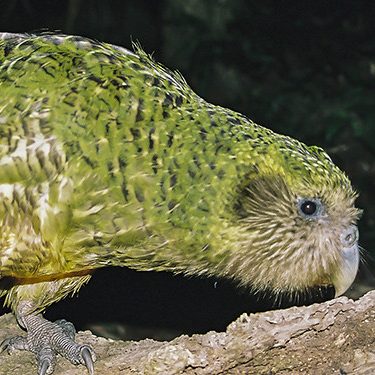
Photo Credit: https://www.nzbirdsonline.org.nz/species/kakapo
Conservation
Unfortunately, thekākāpō has been rated as “Critically Endangered” by the IUCN. Thankfully, research programs such as The Kākāpō Recovery Program are actively supporting and raising awareness in kākāpō conservation.
Conservation Efforts
1. Department of Conservation (New Zealand)
The New Zealand government supports conservation programs, investing in research and habitat restoration.
2. Predator-Free 2050
A nationwide effort to eliminate invasive predators, reducing threats to kakapos and other native species.
Conclusion
The kākāpō is an amazing but highly endangered bird that shows the biodiversity of New Zealand. Despite facing many threats, conservation efforts have helped its population to slowly recover.
By supporting conservation efforts and raising awareness, we can ensure that future generations will continue to wonder at one of the world’s rarest parrots.