
The wandering albatross (Diomedea exulans), also known as the snowy albatross, is known for having the largest wingspan of any living bird.
They are considered large-sized birds. Weighing around 8 to 10 kg with an average height of around 110 cm. They have the world’s largest wingspan, with an average size of 3 m.
Their feathers vary with age. The chicks have brown feathers, and as they age, their feathers turn whiter. Adults have a white body with black and white feathers, male albatross have whiter feathers than female albatross. They also have a pinkish-grey hooked bill.
Behavior
Wandering albatrosses are pelagic birds living almost entirely over the ocean. They can travel up to 10,000 km in a single foraging trip. They can glide for hours without flapping their wings. This helps them cover vast distances while also conserving energy.
One of the most remarkable things about the Wandering Albatross is its ability to sleep while flying. By locking its wings in place and using wind currents, it can rest mid-flight, an essential skill for long flying trips.
The wandering albatross is a vocal bird, they often communicates with their mate and chicks using a variety of calls such as croaks, whistles, and grunts. These calls play an important role in courtship, pair bonding, and interactions between parents and chicks.
Habitat
The wandering albatross’s range extends across the Southern Ocean. They can be found near the sub-Antarctic and Antarctic Islands, Prince Edward Islands, Crozet Islands, Kerguelen Islands, Macquarie Island, and Heard Island.
Sometimes, they are also seen off the coasts of South Africa and Australia. They usually go on land to feed or breed.
Breeding
Wandering albatrosses are a monogamous species, usually forming a bond that lasts for life. They can live up to 50 years.
They have some of the longest reproductive systems among birds. They only breed every 2 years since raising a chick takes around a whole year, and the parents need a full year to recover after raising a chick before attempting to breed again.
They have a courtship ritual that involves spreading their wings while swaying their heads and rapping their bills together.
Female wandering albatrosses only lay one egg every breeding attempt. The incubation process takes around 11 weeks, and both parents incubate the egg.
Diets and Threats
Wandering albatrosses are carnivores. They mainly eat small fish and crustaceans. They hunt by making shallow dives in the water. They’ll also attempt to eat almost anything they come across and will follow ships in hopes of feeding on their garbage.
Since adult wandering albatrosses spend most of their time flying above the ocean, they don’t have natural predators except humans.
But animals such as rats, stray cats, giant petrels, and skuas are known to prey on the eggs and chicks while the parents are looking for food.
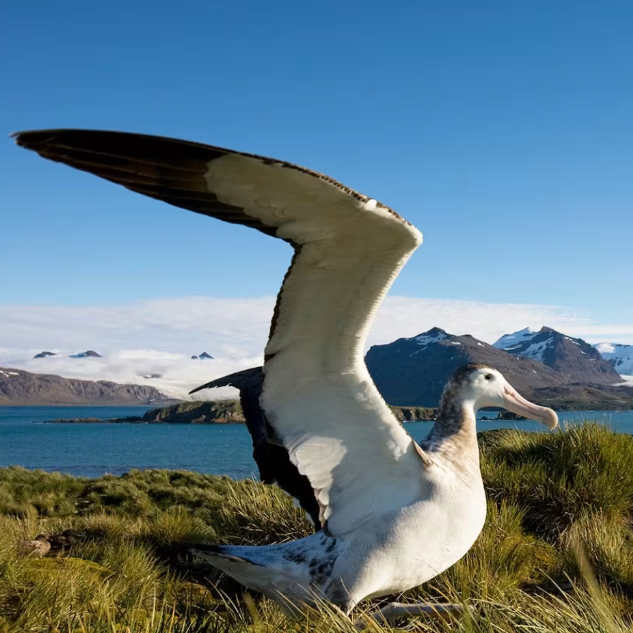
Photo Credit: https://www.quarkexpeditions.com/blog/wildlife-guide-wandering-albatross-facts
Conservation
The wandering albatross is labeled as “Vulnerable” by the IUCN, with populations declining due to fishing practices and pollution. Wandering albatrosses are attracted by the bait for longline fishing and get caught in the same way as fish do.
Conservation Efforts
1. Agreement on the Conservation of Albatrosses and Petrels (ACAP)
ACAP is an international treaty that aims to protect albatrosses and petrels from threats like bycatch and habitat destruction. They also support research and monitoring programs to track population changes.
2. BirdLife International
BirdLife International leads a specialized team of seabird conservationists called the Albatross Task Force. They work with fisheries to prevent albatross deaths caused by fishing gear. They also train fishermen on seabird-friendly fishing techniques.
Conclusion
The wandering albatross is one of the most extraordinary seabirds. They are built for endless travel across the ocean. Despite many challenges, conservation efforts give hope for their future.
By protecting their habitat and reducing threats from fishing and pollution, we can ensure that these incredible seabirds can continue to roam the skies for generations to come.